Inside Norman Foster's Studio: The Experience That Shaped Phil Smith's Architectural Design
A moment that shapes everything
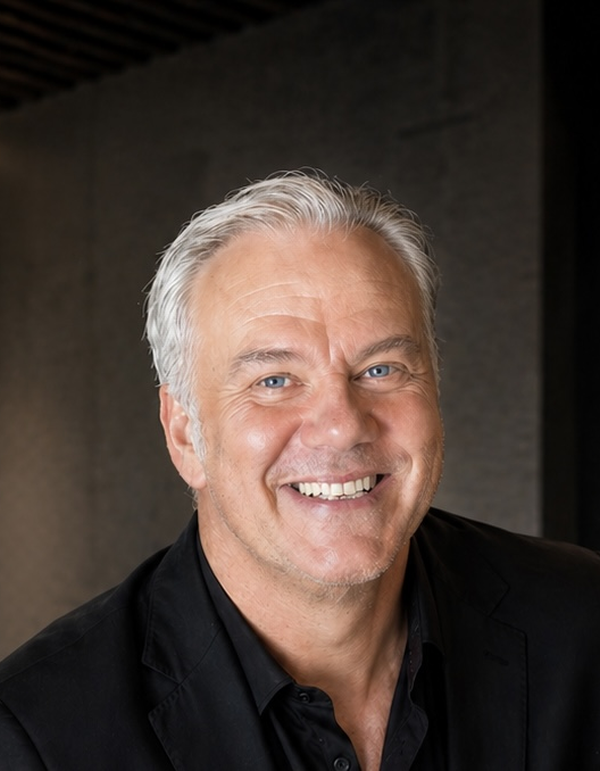
There are moments in a career that quietly shape everything that follows. For Phil, that moment was working in London with Lord Foster of Thames Bank, inside Foster + Partners, one of the most influential architectural practices in the world.
Not as an observer. Not as someone watching from the edge of the room. But as someone who had the rare opportunity to work directly with him across a variety of projects.
That matters, because it gave Phil a close view of how decisions are made at that level, and the thinking that sits behind them.
Who is Lord Foster of Thames Bank?
Lord Foster of Thames Bank is one of the defining architects of the modern era. Born in Manchester in 1935, he came from a working-class background, later studied architecture at Manchester, then won a Henry Fellowship to Yale. In 1967, he founded the practice that would become Foster + Partners, and in 1999 he was granted a life peerage, taking the title Lord Foster of Thames Bank. Over more than five decades, he has built a reputation for innovation, sustainability, and the belief that the quality of our surroundings affects the quality of our lives.
That history matters to this story. Lord Foster was not someone who arrived through privilege or fashion. He built his career through discipline, technical excellence, and an ability to see where architecture needed to go before the rest of the profession got there.
In Hong Kong, the Hongkong and Shanghai Bank Headquarters was not simply an expensive corporate monument. It was designed with flexibility, daylight, social scale, and movement in mind. By the 1990s, the Commerzbank Headquarters in Frankfurt was being recognised as one of the first skyscrapers with an ecological conscience. At the Reichstag in Berlin, Lord Foster's work combined history, democratic symbolism, public accessibility, and environmental ambition. That is the scale of the practice Phil entered — not just famous projects, but projects that kept redefining what architecture could be in different decades.
What it was like working at Foster + Partners
When Phil joined Foster + Partners, it was already operating at a scale very few practices ever reach. He recalls a studio of around 700 people when he started, growing to around 1,500 by the time he left. It was highly technical, highly specialised, and constantly expanding.
But what stayed with him was not simply the size of the studio. It was the seriousness of the work.
This was not architecture as surface. It was architecture as enquiry, coordination, and refinement. Structure, services, materials, environmental performance, urban response, and human experience were all part of the same conversation. That had a lasting effect on Phil because it showed how the best architecture can be both technically rigorous and deeply human at the same time.
It also mattered that Lord Foster sat in the open studio rather than withdrawing into a symbolic corner office. That detail says something about the culture. The work was visible. Ideas were exposed. Architecture was treated as a collective discipline, but one held to an exacting standard.
What Phil learned from working directly with Lord Foster
Phil's account becomes especially valuable when he talks about working directly with Lord Foster on major schemes. What comes through is not some theatrical genius performance. It is something more disciplined and, in many ways, more impressive than that.
Lord Foster could look at a scheme and identify the move that mattered. Not a dozen gestures. Not layers of explanation. One move. The thing that would sharpen the whole project.
That kind of clarity can feel deceptively simple when you hear it. But what Phil saw, over time, was that behind those simple comments sat a huge depth of judgement. Space, structure, circulation, buildability, light, psychology, and urban presence were being read all at once. That is where the magic was — not in flourish, but in the ability to see what others had not yet seen.
Phil also describes Lord Foster as focused, quite introverted, and highly observant. There was no need for noise. The authority came through precision, standards, and the quality of his judgement.
Capital City Academy and the power of one architectural move
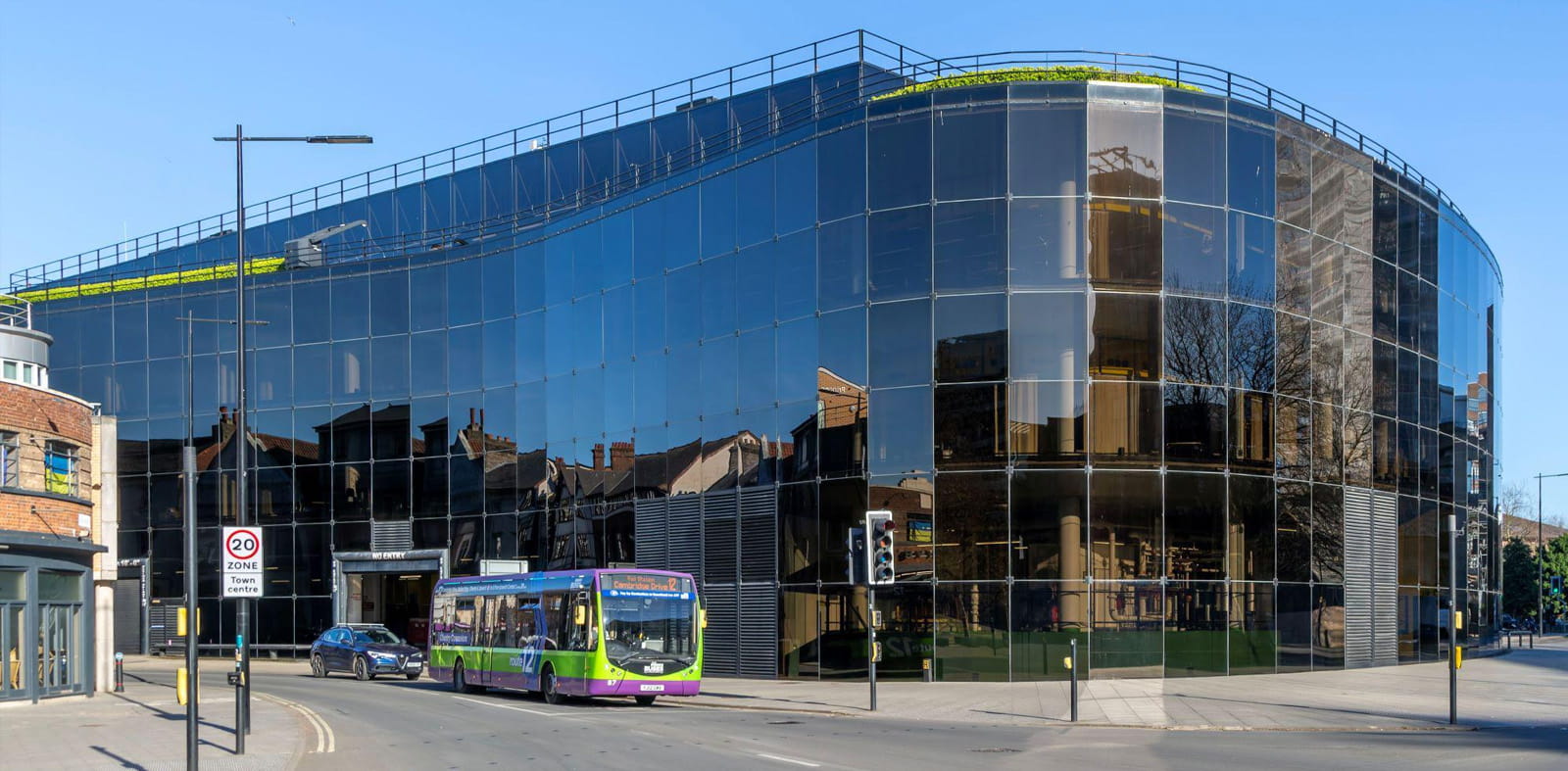
One of the clearest memories Phil shares is the project now known as Capital City Academy in Willesden, designed by Foster + Partners. The scheme was already highly developed — a lot of work had gone in. The building was long and stepped down the hill. Then Lord Foster reviewed it and made a deceptively simple instruction: curve it.
On paper, that sounds minor. In reality, it was not minor at all.
The original scheme allowed you to visually read the whole length of the internal street. Efficient, legible, resolved. But with the introduction of a curve, the building began to unfold in sequence rather than all at once. Your sightline was no longer completely open. The end was concealed. The space started to create anticipation. You wanted to move through it. You wanted to know what was ahead.
That is not decoration. That is not adding a flourish. Architecturally, it is better described as spatial sequencing — the orchestration of movement through controlled sightlines. It changes how a building is read by the body, not just by the eye. It turns a corridor into a journey.
Phil is clear that this was not the easy option. Introducing the curve had real build implications. The roof became more complex. The geometry had to be resolved differently. It made the project harder to build. But it made the building better. In serious architecture, the right move is not always the easiest move.
Why Lord Foster's use of glass was about more than style
Phil's reflections on glass are equally revealing. Foster's work is often reduced to glass and steel, but Phil explains that, inside the office, glass was never understood as a superficial stylistic language. It was about light, openness, outlook, and the human need to feel connected to the outside world.
Across decades, Lord Foster's buildings used atria, daylight, visible movement, open structure, and green space not simply as formal devices, but as ways of making large, complex buildings feel more breathable, more legible, and more humane.
This is where Phil's account becomes especially rich. He did not just see the buildings from the outside. He saw the philosophy being argued from the inside.
How Lord Foster's influence shows up in Phil's architecture today
The influence does not show up as imitation. Phil is not trying to recreate Foster buildings in New Zealand. What remains is more valuable than style. It is a way of thinking.
A belief that a building should unfold, not just appear. A belief that details are part of integrity, not an afterthought. A belief that environmental thinking should be substantive, not fashionable. A belief that architecture can be technically demanding and still deeply humane.
Phil spent time inside Foster + Partners, working directly with Lord Foster, on projects that required a high level of coordination, clarity, and discipline. What he saw was how decisions are made when the stakes are high, and how small changes can significantly shift the quality of a building. That experience still informs how he approaches work today — not in terms of style, but in how problems are understood and resolved.