Commercial Architecture for Resort Development in Fiji
Why inland sites like Vanua Levu are changing how developers think
Fiji's resort market has traditionally been shaped by the coast. Beachfront land has long been the obvious choice for resort development, driven by ocean views, guest expectations, and established tourism patterns. But for developers thinking beyond a conventional resort model, the coastline is no longer the only place where value can be created.
Inland sites, particularly in places like Vanua Levu, offer a different kind of opportunity. They can provide greater scale, stronger connection to the surrounding land, reduced coastal exposure, and the ability to build a destination around something more meaningful than proximity to the beach.
One current project in Vanua Levu shows how this thinking is beginning to shift. Gaia (Earth), led by Blue Phoenix Group, is not being developed as a typical Fiji resort. It is part of a wider regenerative development model, one that connects tourism, agriculture, forest restoration, education, and long-term economic value.
For Smith Architects, the project required a careful architectural response. The question was not simply, "Where should the villas go?" It was, "How can architecture support a much bigger system?"
What makes inland resort development in Fiji viable?
Inland resort development in Fiji becomes viable when the project creates value from the land itself, not just from a view. For developers, inland sites can offer greater land availability and scale, lower pressure from coastal land pricing, reduced exposure to coastal erosion and storm surge, more flexibility in how the destination is planned, and stronger opportunities to connect tourism with agriculture, ecology, and local enterprise.
The challenge is that inland resorts cannot rely on the immediate appeal of a beachfront location. They need a stronger idea. That idea may come from landscape, culture, food production, wellness, ecology, education, or unique natural features such as dark skies. In the case of Gaia, the value is created through a regenerative land model, with architecture designed to sit within and support that model.
Why should developers understand the land before designing?
Developers should understand the land before designing because the most important project decisions are often already present on the site.
In Vanua Levu, the land is shaped by dense vegetation, river movement, established canopy, and surrounding agricultural use. Rather than clearing the site to make construction simpler, the development approach is to retain and work with these conditions. That decision has direct implications for the architecture. Buildings need to respond to existing tree locations. Access needs to move with the natural conditions of the land. Views are framed through the forest, rather than manufactured by removing it.
This is not just an environmental choice. It is also a commercial one. A resort that is shaped by its site is harder to replicate. It can create a stronger guest experience, reduce unnecessary intervention, and support a more defensible long-term proposition.
Why is canopy so important in regenerative resort design?
Canopy is important in regenerative resort design because it supports shade, microclimate, biodiversity, guest experience, and, in this case, agriculture.
At Gaia, the canopy is not treated as a backdrop. It is part of the development system. The project explores a transition away from low-value sugar cane production toward high-value cocoa grown through regenerative agroforestry. Cocoa grows best under shade, which means the canopy is central to the agricultural model. A fast-growing native canopy species supports shade, improves soil fertility through nitrogen fixation, and helps restore rainforest ecology over time.
This means the same landscape strategy protects the visitor experience, supports cocoa production, contributes to forest restoration, reduces the need to clear land for development, and gives the architecture a stronger relationship with place. Rather than separating tourism from land use, Gaia connects them.
How does architecture support regenerative development?
Architecture supports regenerative development by connecting the built environment to the land, the economy, and the long-term purpose of the project.
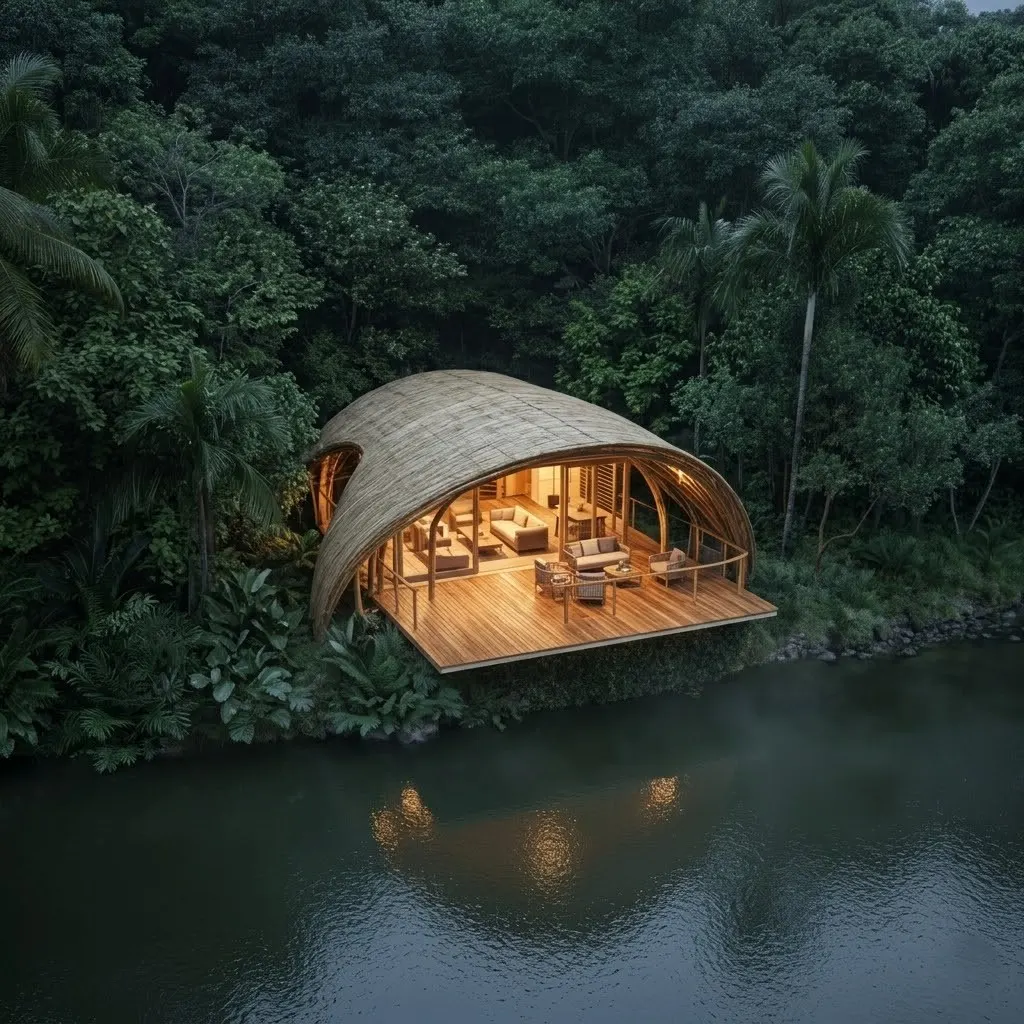
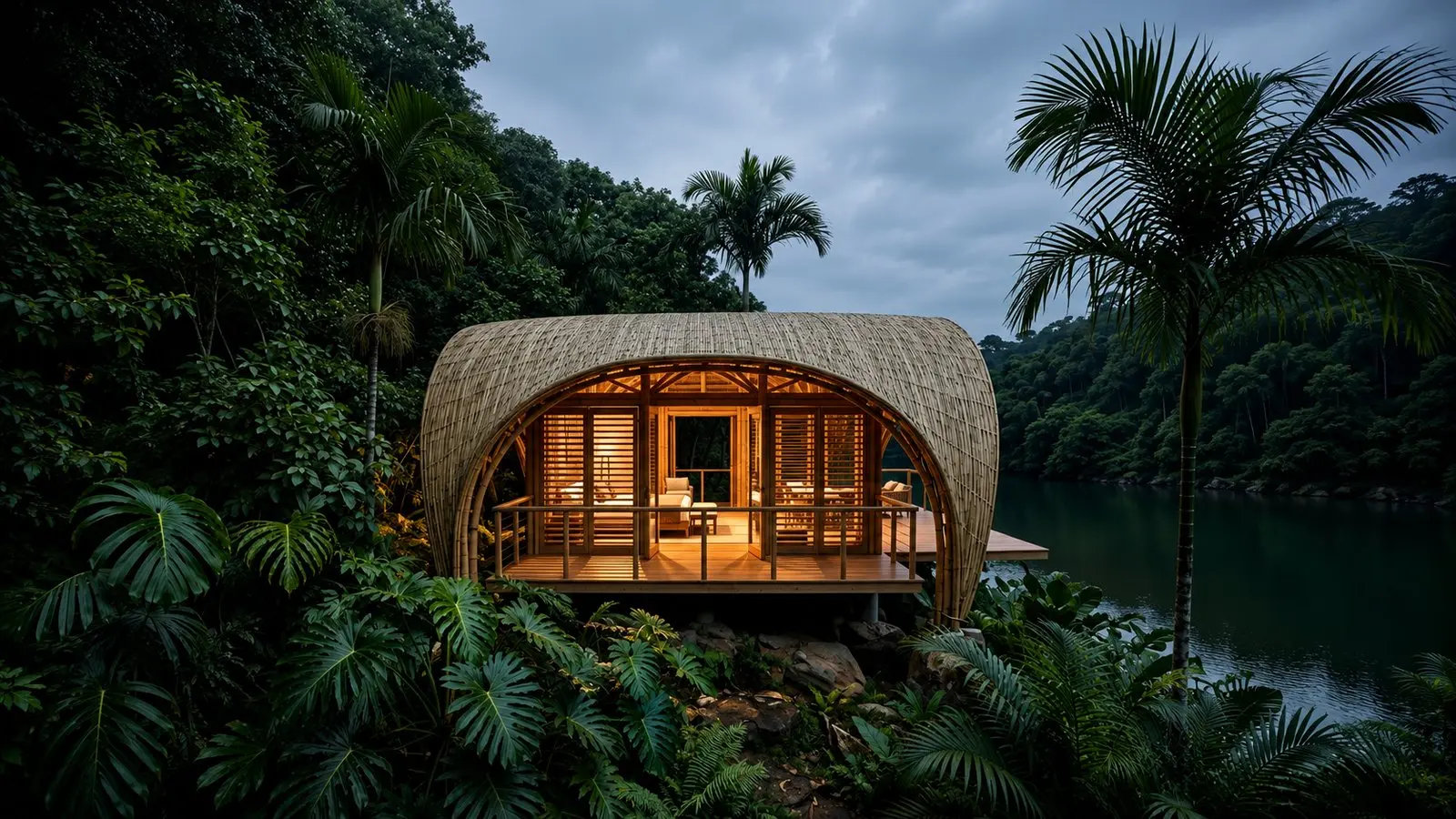
In Gaia, the villas and shared structures are designed to sit lightly beneath the canopy. The built form is intentionally restrained, using low-impact structures that work within the forest rather than dominate it. The architecture frames views to river, vegetation, and sky. Open living spaces create a close connection between inside and outside. The experience is shaped by the environment, rather than added afterwards as a design feature.
This is important because regenerative development is not only about sustainability. It is about designing systems that improve over time. The architecture needs to support that direction. It cannot be isolated from land use, construction method, maintenance, guest experience, or commercial viability.
Why can imported construction systems create risk in Fiji?
Imported construction systems can create risk in Fiji because they often add cost, complexity, delay, and long-term maintenance challenges. A common mistake in Pacific development is to take a construction model that works in New Zealand or Australia and apply it directly to Fiji. This can create avoidable problems including high freight and logistics costs, longer lead times, supply chain exposure, maintenance issues if specialist parts or skills are unavailable locally, poorer alignment with climate and site conditions, and reduced involvement of local construction capability.
For Gaia, the architectural response is grounded in what makes sense for the location. Bamboo and timber are central to the design, not just because they suit the visual character of the project, but because they respond to practical realities. This is where good resort architecture becomes more than form-making. It is about reducing risk early, before those risks become expensive on site.
What role does bamboo play in Fiji resort architecture?
Bamboo can play an important role in Fiji resort architecture when it is used as part of a practical, site-led construction strategy.
In Gaia, bamboo supports the low-impact nature of the villas and shared structures. It fits the tropical setting, sits naturally within the forested environment, and helps reduce the dependence on imported systems. The use of bamboo also supports the broader architectural intent. The buildings are designed to feel connected to the landscape, not placed on top of it. Their material language is warm, natural, and recessive, allowing the canopy, river, and sky to remain the dominant experience. This makes the architecture feel grounded in Fiji rather than imported into it.
How does Dark Sky design change resort architecture?
Dark Sky design changes resort architecture by making darkness a design requirement.
Gaia includes Fiji's first internationally recognised Dark Sky Zone, located away from major light pollution. This creates opportunities for astro-tourism, education, research, and global engagement. For architects, this changes how buildings are planned and detailed. Lighting needs to be controlled, light spill needs to be minimised, and pathways, villas, and shared spaces need to support safety without compromising the night sky.
This gives the resort a unique layer of experience. Guests are not only immersed in forest and river systems, they are also connected to the celestial environment above them. For an inland resort, this is especially powerful. It creates a destination experience that does not depend on the beach.
Why does repeatable villa design matter for resort development?
Repeatable villa design matters because it allows a resort to be delivered in stages while maintaining consistency, cost control, and design quality. For large or complex sites, every building cannot be treated as a one-off design exercise. That creates unnecessary cost and delivery risk.
At Gaia, the villa form is designed to be repeatable and adaptable across the site. This supports staged development while still allowing each villa to respond to its specific position within the canopy. The roof form responds to tropical rainfall and helps reduce visual impact. The structure is kept practical. The material choices support local construction logic. The internal planning focuses on outlook, openness, and connection to the environment.
The architecture needs to feel personal and immersive for guests, but it also needs to be buildable, maintainable, and commercially sensible for the developer.
How can resort development support higher-value land use?
Resort development can support higher-value land use when it is planned as part of a wider economic system.
In Fiji, large areas of land have historically been tied to sugar cane. While sugar cane has played a major role in the country's history, it is a lower-value crop with limited long-term return compared with emerging opportunities such as cocoa. Gaia explores how resort development can help support that transition. By connecting tourism with cocoa production, regenerative agroforestry, education, and land restoration, the project creates more than a visitor destination. It creates a platform for local capability, export potential, and long-term economic resilience.
This matters for developers because it changes the value equation. The resort is not the only asset. The land system around it also becomes part of the development's long-term value.
What does Gaia show about the future of resort development in Fiji?
Gaia shows that the future of resort development in Fiji does not need to be limited to beachfront land. Inland sites can create powerful destinations when they are supported by a strong development vision and a careful architectural response.
The project demonstrates how tourism, regenerative agriculture, rainforest restoration, indigenous ownership, Dark Sky tourism, and local economic value can be considered together. For Smith Architects, the project reflects the role architecture can play in complex, long-term developments. The architecture is not treated as a standalone object. It becomes part of a larger system, helping shape how people experience the land, how the development is delivered, and how value is created over time.
Fiji's resort market is evolving. The next generation of successful developments will not be defined by location alone. They will be defined by how well they understand land, reduce risk, support local systems, and create experiences that cannot be easily copied. Gaia is one example of what that future could look like.